타인이라는 포말 앞에서
In Front of the Foam Called Others
이진실 Lee Jinshil (미술비평 Art critic ) / 2019
이진실 Lee Jinshil (미술비평 Art critic ) / 2019
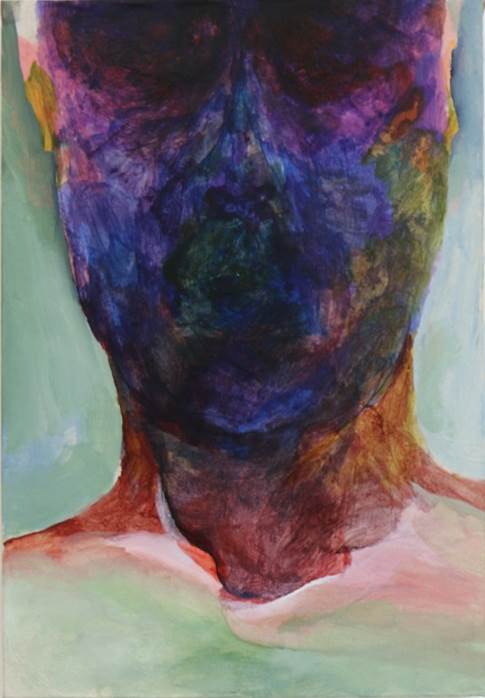
피멍이 든 것 같은 울긋불긋한 얼굴이 있다. 눈은 지워지고 굳게 다문 입은 부어올라 있다. 마치 폭력에 짓이겨진 듯한 얼굴 형상 그림들은 어떤 사건의 피해자들 같다.그림의 제목은 <오해>(2013)다.
아, 그렇다면 지금 내가 이 그림을 보고 있는 피해자를떠올리는 것은 오해라는 말이겠다. 무엇을 오해하고 있는가?
![]()
![]()
![]() 오해(2013), Pause-cleaning(2019)
Remove or Stack(2019)
김선영의 대답은 “나는 괜찮다”이다. 그림은 자화상일 수 있
고, 사람들은 내가 얻어맞고 있는 것으로 보이지만 나는 의연하다, 그다지 아프지 않다고 이야기하고 싶다는 것이다. 작가의 말이 납득되기에는 얼룩덜룩한 얼굴이 너무나 강렬하다. 이 이중부정의 태도, 수동공격의 태도는 윤
곽 없이 부글부글한 얼굴의 형상 그 자체와 겹쳐지면서 내게 아주 오랫동안 잔상을 남겼다.
오해(2013), Pause-cleaning(2019)
Remove or Stack(2019)
김선영의 대답은 “나는 괜찮다”이다. 그림은 자화상일 수 있
고, 사람들은 내가 얻어맞고 있는 것으로 보이지만 나는 의연하다, 그다지 아프지 않다고 이야기하고 싶다는 것이다. 작가의 말이 납득되기에는 얼룩덜룩한 얼굴이 너무나 강렬하다. 이 이중부정의 태도, 수동공격의 태도는 윤
곽 없이 부글부글한 얼굴의 형상 그 자체와 겹쳐지면서 내게 아주 오랫동안 잔상을 남겼다.
뒤통수를 그린 듯한 형상이 있다. 눈코입은 없고 머리를 그린 그림이 켜켜이 쌓여있다. 모두 뒷모습 같다. 어떤 포즈나 동작, 사건 속 인물이 아니라, 증명사진과 같은 프레임에 뒤통수만 그려진 그림이라니. 아니 뒤통수는 사실이 아니고, 앞인지 뒤인지 모르지만 어쨌든 얼굴이 없는 그림들이라니. <Pause-cleaning>이라는 제목을 지닌 익명의 머리들은 얇고 묽게 칠해져있어서 마치 얼굴의 세부가 흘러내리고 만 것처럼 보인다. <Remove or Stack>에서 얼굴은 그와 반대로 겹겹의 덧칠로 비관적이고 시커멓다. 얼굴의 형상이 희미해진 것은 마찬가지지만, 묽어지는 것이 아니라 짙은 그림자들이 붙어있고 표정을 읽을 만한 눈과 입언저리 주변은 심연과 같은 구멍으로 번지고 있다. 들뢰즈는 프란시스 베이컨의 초상화가 얼굴을 해체하고 있으며, 그것은 인간 자신이 고통받는 짐승의 존재와 같다는 일종의 실존 체험에서 비롯한 고기로서의 머리-형상이라고 말한 바 있다. 그러한 해체적 형상이 보여주는 폭력은 공포를 재현하는 것이 아니라, 감각의 폭력을 그려냄으로써 현실의 더욱 실재적인 이미지를 만들어낸다. 김선영의 그림에서도 등장하는 안구 없이 함몰된 얼굴, 심연과 같은 구멍으로서의 입은 어떤 이가(혹은 작가가) 당하는 폭력, 혹은 시선적 폭력 그 자체를 보여주는 것이 아니라, 그러한 ‘머리’의 감각적 형상으로서 작가의 축적되고 응결된 폭력의 감각을 비구상적으로 분출하고 있다.
“나는 이 공고하게 다져진 사회 안에서 여전히 굳건하지 못하고 흔들거리며 휘청이고 있다.”고 스스로 털어놓는 것처럼, 김선영의 그림은 막연함과 불안으로 흔들리는 자신을 적나라하게 표현한다. 되돌아보았을 때, 작가는 <오해>와 같은 그림들이 ‘주체가 없는’ 그림이라면서 그러한 주체성의 부재를 성찰하며 <Pasue-cleaning>을 그렸다고 한다. 근래에 그린 <Remove or Stack>이나 <없는 사람>에서는 더욱 강렬하면서 어두운 초상화들을 만들어냈다. 흥미롭게도 그에게 있어서 자신을 벗겨내는 것, 익명의 주체에서 표정을 지닌 얼굴로 어떤 존재를 드러내는 행위는 여러 번의 붓질로 색들을 겹겹이 쌓고, 불투명성과 그림자들을 계속 고착시키는 방식으로 구현된다. 그의 그림은 적나라해질수록 심연에 가까운 그 무엇이 되고 있다.초상화든, 풍경화든, 아니면 연극무대와 같은 어떤 장면이든 화가의 그림은 언제나 자신의 정서를 암암리에 반영한다. 이는 너무나 자명하기에, 김선영의 그림을 자기고백적 혹은 심리적 투사로 읽게 되는 것은 어쩔 수 없을지도 모르겠다.
지난 한두해 동안 자가면역질환을 겪으며 사람들과 만나기도, 작업을 지속하기도 힘들었던 작가의 현실, 그리고 사람들과 다시 만나며, 작가라는 사회적 커리어를 두고 인정투쟁에 뛰어들기에 자꾸만 쪼그라드는 자의식과 불안. 그런 것들이 김선영의 그림에 배어있음을 부정할 수는 없다. 그러나 그것이 그림의 내용은 아니다. 일련의 초상에 드리운 어두운 뉘앙스와 그림자인지 실체인지 분간하기 어려운 말레리슈적 덩어리들은 자꾸 형상과 배경을, 그리고 자신(혹은 인물)과 그것이 바라보는 세계를 배면처럼 붙여놓는다.
![]()
![]() 닿지 않는 땅(2019), 덜익은 마음(2019)
닿지 않는 땅(2019), 덜익은 마음(2019)
<닿지 않는 땅>(2019)에서 처럼 해초 가득한 물 위에 떠있는 인간의 모습이 어느 윤곽선 하나 없이 서로 용해되어 가는 과정에서도, <덜 익은 마음>(2019)에서 옅은 터치들이 이루는 꽃잎들에서도 세계와 자신의 상태는 구분된 것이 아니라, 세계로 빨려들어가기도, 그 세계로부터 솟아나기도 하는 신체성 그 자체다. 이는 이 그림들이 그저 심리적 투사가 아니라 현상학적 좌표를 지닌 형상들로 기능한다는 것을 보여준다.오히려 김선영의 그림에서 어느 정도 일관적인 하나의 요소가 있다면 그것은 일련의 ‘막’이다. 장막이나 커튼처럼 구체적인 이미지로 드러나지 않지만, 초상이든, 풍경이든, 추상에 가까운 구도이든 그의 그림 어디에서도 발견되는 것은 ‘가리워져 있는 그 무엇’을 응시하고 있는 시점과 거리감이다. <( )으로 가는 길>의 괄호는 구체적 현장성에 대한 언급을 피하고자 하는 세심한 태도이지만, 그 장소에 대한 작가의 주관적 정서와 해석을 철저하게 가려버리고 만다. 헤이리 근처의 풍경들을 그린 그 그림들에서 잡목의 덩쿨들과 철조망은 그 사이로 비치는 어떤 실체를 가리는 심리적 장막들로 등장한다. 작가는 자신의 저 방해물들 너머로 무엇을 보고 있는지, 또 무엇을 욕망하는지 그림을 보는 이에게 투명하게 공유하고 싶어하지 않는다.
어쩌면 그러한 장막과 실체의 가리워짐은 작가의 사적 느낌이 아니라, 지금 한국 사회에서 불안을 먹고 살아가는 모든 이들에게 똑같이 작동하는 정서라고 하는 게 맞을 지도 모르겠다. 공유하고 말 것이 없는, 너나 할 것 없이 말하지 않아도 모두 알고 느끼는 그런 것 말이다. 수많은 정보들이 넘치지만 실체를 알 수 없는 막막함, 언제나 연결되어 있지만 방 안에 갇힌 소외감, 그리고 내 자신을 노출하는 동시에 가려야 한다는 불안감은 지금 시대를 관통하는 공동의 정서다. 무엇보다 요즈음처럼, 소셜미디어에 자신을 노출하지 않으면 사회적 존재가 되지 못하는 박탈감을 안겨주는 시대가 있었던가. 지금처럼 불평등과 억울함, 희망없는 현실이 세대적, 계급적 적대감으로 거리와 온라인에서 나뉘어 서로 소리를 질러대던 때가 있었던가. 언제든지 익명의 군중들 앞에서 내 몸뚱아리가, 내 이름이 놀림거리가 될 수 있다는 공포를 겪었던 시기가 있었던가. 이 시대 타인은 밀려드는 공포이다. 김선영의 그림은 단지 개인의 심리적 투사라기보다 그러한 공포와 불안 앞에서 망설이는 동시대적, 보편적 정서를 보여준다.
오히려 굉장히 작가적·개성적 면모로 드러나는 것은 그 공포와 대면하는 태도다.
김선영이 지닌 망설임의 한 자락에는 이 은폐된 익명들의 네트워크에서 뒤로 물러서 있기보다 자신을 오히려 한겹 한겹 벗겨내고 맨살을 드러내려는 용기가 있다. 더불어 내가 타율적인 그 무엇에 휩싸일지도 모른다는 불안, 그리고 다시금 맘을 먹어보지만 여전히 저 세계에 뛰어들기를 주저하는 스스로의 상태를 좀 더 적나라하게 그려내보고 있다.
![]()
![]()
![]()
타인의 세계는 가면의 세계이고, 게임의 세계다. 그것은 긴장과 불안을 품고 있지만 그 만큼 또 짜릿하다. 우리는 그걸 안다. <파도 같은 것>(2015)에서 작가는 파도에 휩싸인 인물이 포말을 맞이하고 기꺼이 안기는 것처럼 그렸다. <하얀파도와 검은 숨>(2016)에서 파도는 방안을 거세게 감싸고, 인물의 형상은 검고 무력하게 엎드려 있다. 아주 최근에야 그린 <어제 주운 꿈>(2019)에서 한 인물이 숲을 투사한 듯한 스크린 속에서 달려오는 존재들을 바라보고 있다. 그는 그들을 환하게 맞이할 수도 있고, 스크린 속으로 뛰어들 수도 있다. 그림은 신기하게도 그러한 망설임을 담아낸다. 실패나 비관의 감각이 아니라, 의지와 낙관의 감각이 아니라, 아직 결정되지 않은 가능성의 형상을 순간적으로 포착하려는 듯 말이다. <Un-cast>(2019)의 인물은 다리를 접은 채 웅크려 누워있다. 위아래가 뒤집힌 채 머리와 젖가슴은 시커
멓다. 그러나 두터운 그림자가 있는 그 지점들이 곧 기지개를 펼 수 있는 탄성의 힘을 내뿜을 것이다. 김선영의 망설임에 어떤 투지가 엿보이는 곳은 저러한 색들의 주저없는 흐름, 색들의 회오리에서다. ︎


뒤통수를 그린 듯한 형상이 있다. 눈코입은 없고 머리를 그린 그림이 켜켜이 쌓여있다. 모두 뒷모습 같다. 어떤 포즈나 동작, 사건 속 인물이 아니라, 증명사진과 같은 프레임에 뒤통수만 그려진 그림이라니. 아니 뒤통수는 사실이 아니고, 앞인지 뒤인지 모르지만 어쨌든 얼굴이 없는 그림들이라니. <Pause-cleaning>이라는 제목을 지닌 익명의 머리들은 얇고 묽게 칠해져있어서 마치 얼굴의 세부가 흘러내리고 만 것처럼 보인다. <Remove or Stack>에서 얼굴은 그와 반대로 겹겹의 덧칠로 비관적이고 시커멓다. 얼굴의 형상이 희미해진 것은 마찬가지지만, 묽어지는 것이 아니라 짙은 그림자들이 붙어있고 표정을 읽을 만한 눈과 입언저리 주변은 심연과 같은 구멍으로 번지고 있다. 들뢰즈는 프란시스 베이컨의 초상화가 얼굴을 해체하고 있으며, 그것은 인간 자신이 고통받는 짐승의 존재와 같다는 일종의 실존 체험에서 비롯한 고기로서의 머리-형상이라고 말한 바 있다. 그러한 해체적 형상이 보여주는 폭력은 공포를 재현하는 것이 아니라, 감각의 폭력을 그려냄으로써 현실의 더욱 실재적인 이미지를 만들어낸다. 김선영의 그림에서도 등장하는 안구 없이 함몰된 얼굴, 심연과 같은 구멍으로서의 입은 어떤 이가(혹은 작가가) 당하는 폭력, 혹은 시선적 폭력 그 자체를 보여주는 것이 아니라, 그러한 ‘머리’의 감각적 형상으로서 작가의 축적되고 응결된 폭력의 감각을 비구상적으로 분출하고 있다.
“나는 이 공고하게 다져진 사회 안에서 여전히 굳건하지 못하고 흔들거리며 휘청이고 있다.”고 스스로 털어놓는 것처럼, 김선영의 그림은 막연함과 불안으로 흔들리는 자신을 적나라하게 표현한다. 되돌아보았을 때, 작가는 <오해>와 같은 그림들이 ‘주체가 없는’ 그림이라면서 그러한 주체성의 부재를 성찰하며 <Pasue-cleaning>을 그렸다고 한다. 근래에 그린 <Remove or Stack>이나 <없는 사람>에서는 더욱 강렬하면서 어두운 초상화들을 만들어냈다. 흥미롭게도 그에게 있어서 자신을 벗겨내는 것, 익명의 주체에서 표정을 지닌 얼굴로 어떤 존재를 드러내는 행위는 여러 번의 붓질로 색들을 겹겹이 쌓고, 불투명성과 그림자들을 계속 고착시키는 방식으로 구현된다. 그의 그림은 적나라해질수록 심연에 가까운 그 무엇이 되고 있다.초상화든, 풍경화든, 아니면 연극무대와 같은 어떤 장면이든 화가의 그림은 언제나 자신의 정서를 암암리에 반영한다. 이는 너무나 자명하기에, 김선영의 그림을 자기고백적 혹은 심리적 투사로 읽게 되는 것은 어쩔 수 없을지도 모르겠다.
지난 한두해 동안 자가면역질환을 겪으며 사람들과 만나기도, 작업을 지속하기도 힘들었던 작가의 현실, 그리고 사람들과 다시 만나며, 작가라는 사회적 커리어를 두고 인정투쟁에 뛰어들기에 자꾸만 쪼그라드는 자의식과 불안. 그런 것들이 김선영의 그림에 배어있음을 부정할 수는 없다. 그러나 그것이 그림의 내용은 아니다. 일련의 초상에 드리운 어두운 뉘앙스와 그림자인지 실체인지 분간하기 어려운 말레리슈적 덩어리들은 자꾸 형상과 배경을, 그리고 자신(혹은 인물)과 그것이 바라보는 세계를 배면처럼 붙여놓는다.
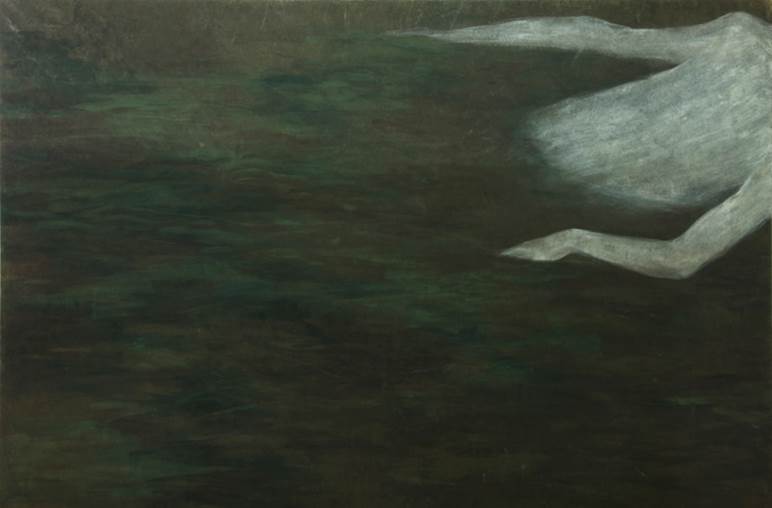

<닿지 않는 땅>(2019)에서 처럼 해초 가득한 물 위에 떠있는 인간의 모습이 어느 윤곽선 하나 없이 서로 용해되어 가는 과정에서도, <덜 익은 마음>(2019)에서 옅은 터치들이 이루는 꽃잎들에서도 세계와 자신의 상태는 구분된 것이 아니라, 세계로 빨려들어가기도, 그 세계로부터 솟아나기도 하는 신체성 그 자체다. 이는 이 그림들이 그저 심리적 투사가 아니라 현상학적 좌표를 지닌 형상들로 기능한다는 것을 보여준다.오히려 김선영의 그림에서 어느 정도 일관적인 하나의 요소가 있다면 그것은 일련의 ‘막’이다. 장막이나 커튼처럼 구체적인 이미지로 드러나지 않지만, 초상이든, 풍경이든, 추상에 가까운 구도이든 그의 그림 어디에서도 발견되는 것은 ‘가리워져 있는 그 무엇’을 응시하고 있는 시점과 거리감이다. <( )으로 가는 길>의 괄호는 구체적 현장성에 대한 언급을 피하고자 하는 세심한 태도이지만, 그 장소에 대한 작가의 주관적 정서와 해석을 철저하게 가려버리고 만다. 헤이리 근처의 풍경들을 그린 그 그림들에서 잡목의 덩쿨들과 철조망은 그 사이로 비치는 어떤 실체를 가리는 심리적 장막들로 등장한다. 작가는 자신의 저 방해물들 너머로 무엇을 보고 있는지, 또 무엇을 욕망하는지 그림을 보는 이에게 투명하게 공유하고 싶어하지 않는다.
어쩌면 그러한 장막과 실체의 가리워짐은 작가의 사적 느낌이 아니라, 지금 한국 사회에서 불안을 먹고 살아가는 모든 이들에게 똑같이 작동하는 정서라고 하는 게 맞을 지도 모르겠다. 공유하고 말 것이 없는, 너나 할 것 없이 말하지 않아도 모두 알고 느끼는 그런 것 말이다. 수많은 정보들이 넘치지만 실체를 알 수 없는 막막함, 언제나 연결되어 있지만 방 안에 갇힌 소외감, 그리고 내 자신을 노출하는 동시에 가려야 한다는 불안감은 지금 시대를 관통하는 공동의 정서다. 무엇보다 요즈음처럼, 소셜미디어에 자신을 노출하지 않으면 사회적 존재가 되지 못하는 박탈감을 안겨주는 시대가 있었던가. 지금처럼 불평등과 억울함, 희망없는 현실이 세대적, 계급적 적대감으로 거리와 온라인에서 나뉘어 서로 소리를 질러대던 때가 있었던가. 언제든지 익명의 군중들 앞에서 내 몸뚱아리가, 내 이름이 놀림거리가 될 수 있다는 공포를 겪었던 시기가 있었던가. 이 시대 타인은 밀려드는 공포이다. 김선영의 그림은 단지 개인의 심리적 투사라기보다 그러한 공포와 불안 앞에서 망설이는 동시대적, 보편적 정서를 보여준다.
오히려 굉장히 작가적·개성적 면모로 드러나는 것은 그 공포와 대면하는 태도다.
김선영이 지닌 망설임의 한 자락에는 이 은폐된 익명들의 네트워크에서 뒤로 물러서 있기보다 자신을 오히려 한겹 한겹 벗겨내고 맨살을 드러내려는 용기가 있다. 더불어 내가 타율적인 그 무엇에 휩싸일지도 모른다는 불안, 그리고 다시금 맘을 먹어보지만 여전히 저 세계에 뛰어들기를 주저하는 스스로의 상태를 좀 더 적나라하게 그려내보고 있다.

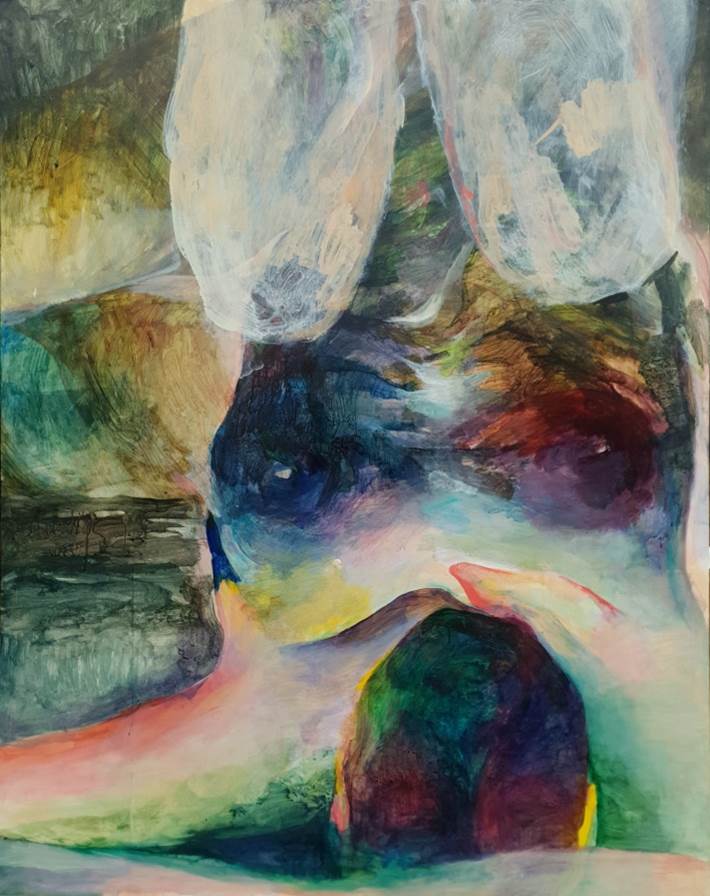
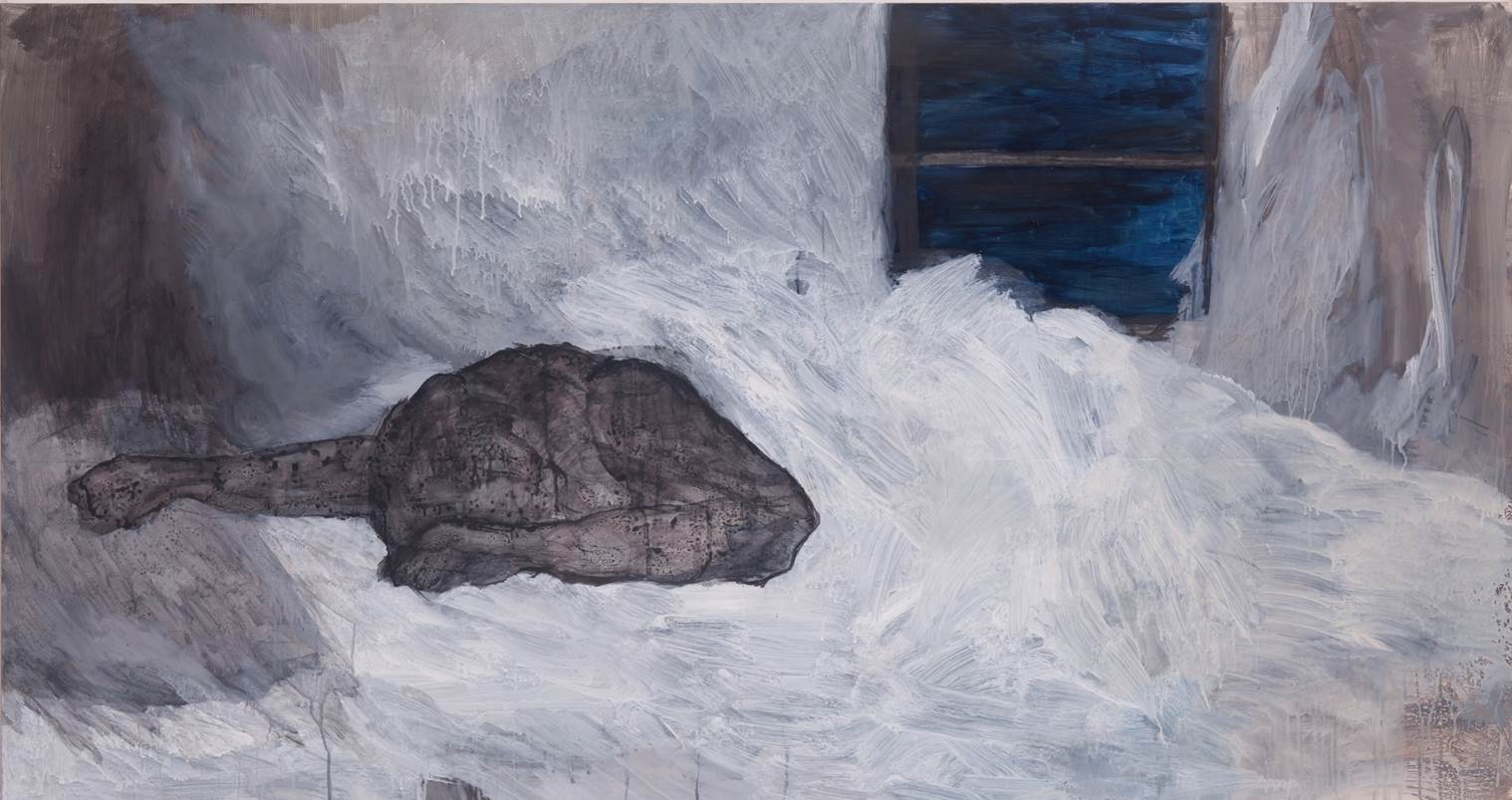
타인의 세계는 가면의 세계이고, 게임의 세계다. 그것은 긴장과 불안을 품고 있지만 그 만큼 또 짜릿하다. 우리는 그걸 안다. <파도 같은 것>(2015)에서 작가는 파도에 휩싸인 인물이 포말을 맞이하고 기꺼이 안기는 것처럼 그렸다. <하얀파도와 검은 숨>(2016)에서 파도는 방안을 거세게 감싸고, 인물의 형상은 검고 무력하게 엎드려 있다. 아주 최근에야 그린 <어제 주운 꿈>(2019)에서 한 인물이 숲을 투사한 듯한 스크린 속에서 달려오는 존재들을 바라보고 있다. 그는 그들을 환하게 맞이할 수도 있고, 스크린 속으로 뛰어들 수도 있다. 그림은 신기하게도 그러한 망설임을 담아낸다. 실패나 비관의 감각이 아니라, 의지와 낙관의 감각이 아니라, 아직 결정되지 않은 가능성의 형상을 순간적으로 포착하려는 듯 말이다. <Un-cast>(2019)의 인물은 다리를 접은 채 웅크려 누워있다. 위아래가 뒤집힌 채 머리와 젖가슴은 시커
멓다. 그러나 두터운 그림자가 있는 그 지점들이 곧 기지개를 펼 수 있는 탄성의 힘을 내뿜을 것이다. 김선영의 망설임에 어떤 투지가 엿보이는 곳은 저러한 색들의 주저없는 흐름, 색들의 회오리에서다. ︎
There is a face that looks like it has been marked with bruises. The eyes are erased and the tight-shut mouth is swollen. Pictures of faces that seem to have been impaired by violence inevitably remind us of the victims of crime. The title of the painting is Misunderstanding (2013). Ah, then it is a misunderstanding to recall the victims when I look at this painting. What are we misunderstanding? Kim Sunyoung’s answer is, “I’m fine.” According to her, this painting may be her self-portrait, and people may think that she is being beaten, but she wants to say, “I am standing firm, and it doesn’t hurt much.” The mottled
face is too intense for me to be convinced by her words. This attitude of double negative and passive attack, overlapped with the shape of the face without contours, left a strong impression on me for a long time afterwards.
There is an image that looks like the back of a head. Several pictures of heads without eyes, noses, nor mouths are stacked on top of each other. All seem to be the back of someone. They are not pictures of human figures with a posture, or in the middle of an action, or persons at an event, but rather pictures with only the back of the head in a frame, much like an ID photo. No, the back of the head is not accurate. I don’t know if it is the front or the back, but anyway, they are pictures without faces. The anonymous heads in the Pause-cleaning are painted thinly and with a lot of wash, so it looks as if the details of the face have floated away. On the contrary, in Remove or Stack, the face gives the impression of being pessimistic and dark because of the layers of paint. The shape of the face is blurred, as in the former works, yet it does not get diluted. Dark shadows are attached to the face, and the periphery of the eyes and mouth allows us to read the expression as diffusing into holes that resemble an abyss. Deleuze has said that the portraits by Francis Bacon deconstruct the face, so the heads of his
subjects look like slabs of meat. This idea was derived from a kind of existential experience that the existence of a human being is like that of a suffering beast. The violence exposed by such deconstructive forms does not represent fear, but creates a more realistic image of reality by depicting the violence of the senses. The image of a sunken face without eyeballs and the mouth as a hole like an abyss in Kim Sunyoung’s paintings do not show the violence suffered by any person (or the artist), or the violence of the gaze itself, but depict the artist’s sense of accumulated and condensed violence non-representatively
in the form of the sensuous forms of the ‘head’.
Kim Sunyoung’s paintings express her viewpoint frankly, although shakily and with a vagueness and anxiety, as she confides,
“I’m still unsteady, swinging and reeling in this solidified society.” Looking back, she says that her paintings, such a Misunderstanding, are ‘subjectless’ and she has painted Pasue-cleaning to reflect on the absence of such subjectivity. In Remove or Stack and Absent People, her recent works, she has created more intense and bleak portraits. Interestingly, stripping herself off, an act of revealing an entity from an anonymous subject to a face with an expression, is realized by stacking layers of colors with multiple brush strokes and continuously altering the opacity and shadows. As her paintings become simpler, they get closer to an abyss.
Whether it is a portrait, a landscape, or theatrical scene, a painting always reflects the artist’s own emotions. This is so obvious that it may be inevitable to read Kim Sunyoung’s painting as a confessional or psychological projection. While suffering from an autoimmune disease over the past couple of years, she had trouble meeting people and continuing to work. The suffocating self-consciousness and anxiety, that makes it hard for her to meet people again and enter into the struggle for recognition that makes up the social aspects of an artist’s career, permeate Kim Sunyoung’s paintings. But that is not the content of her paintings. The dark nuances and the malerisch lumps of some shadows or entities that overshadow a series of her portraits, keep attaching shapes tobackgrounds, and the self (or a figure) to the world just like their other sides.. The human figure floating on water filled with seaweed dissolves formlessly in <The Untouched Land (2019)>, and the light touches faint petals in <The Unripe Mind (2019)>. Here, the world and the artist’s own inner state are not separated, but are the physicality itself, which is sometimes sucked into the world and sometimes springs out of the world. This suggests that these pictures function not merely as psychological projections but as shapes that have phenomenological coordinates.
Rather, if there is any element that is somewhat consistent in Kim Sunyoung’s paintings, it is a series of ‘curtains’. Although they do not appear as an actual curtain or veil, what is often found in her paintings, whether it be a portrait, a landscape, or a composition that is close to abstraction, is the point of view and the sense of distance that indicates ‘something that is hidden’. The parenthesis in <Way to ( )> indicates a conscientious attempt to avoid mentioning a specific place, but it completely veils the artist’s subjective emotions and interpretation of the place. In the paintings of the landscapes near Heyri, the tendrils of scrubs and the barbed wire emerge as psychological veils to conceal an entity seen through them. The artist does not want to plainly share with the viewer what she sees beyond those obstacles and what she desires.
Perhaps it is true that the veil and the cover of reality are not the artist’s personal feelings, but emotions that are equally relevant to all who live in anxiety in Korean society. It is something you don’t even have to share and talk about. We all know and feel it. The vagueness of a reality that is unknown in the midst of overflowing information, the sense of alienation that one is trapped in a room despite the ubiquitous connectedness, and the anxiety of exposing and hiding oneself simultaneously: these are the common sentiments of this age. Was there ever another era of deprivation like ours, in which we cannot become social beings at all without exposing ourselves to social media? Has there been a time like this when people’s voices are divided and shouted at each other on the streets and across the Internet in generational and class hostility in the face of inequality, injustice, and hopeless reality? Has there ever been a time when people had the fear that their body and name could be ridiculed at any time in front of an anonymous crowd? In this age, others are terrors that rush in. Kim’ paintings show contemporary and universal sentiments that hesitate in the face of such fear and anxiety, rather than simply showing the psychological projections of an individual. On the contrary, it is the artist’s attitude of facing this fear that turns out to be very individual. Behind the artist’s hesitation is the courage to strip herself off and reveal her skin layer after layer, rather than to step back from this network of anonymity. In addition, she is portraying her anxiety that she may be engulfed by something external to herself. Additionally, she shows her current state in which she is trying to be resolute again, but still reluctant to dive into that world.
The world of others is a world of masks and a world of games. It has tension and anxiety, but it is also exciting. We know that. <Something Like Waves (2015)> shows a person enveloped by waves welcoming the foam and willing to be embraced by
it. In White Waves and Black Breath (2016), the waves wildly wrap around the room, and the darkish shape of the figure lies
prostrate and helpless. In her very recent work, <The Dream I Picked Up Yesterday (2019)>, a person looks at beings running
around a screen that seems to depict a forest. She may greet them in a bright smile, or she may jump into the screen. The painting curiously captures that hesitation, as if to capture, not a sense of failure or pessimism, nor a sense of will and optimism,but rather a form of possibility in a moment that has not yet been decided. The figure in <Un-cast (2019)> is lying curled up with her legs folded. Her head is jet-black and upside-down and her breasts are similarly colored, but those spots with thick shadows will soon relent and stretch out. Through the unhindered whirlwind and flow of those colors, we glimpse some determination in Kim Sunyoung’s hesitation. ︎
face is too intense for me to be convinced by her words. This attitude of double negative and passive attack, overlapped with the shape of the face without contours, left a strong impression on me for a long time afterwards.
There is an image that looks like the back of a head. Several pictures of heads without eyes, noses, nor mouths are stacked on top of each other. All seem to be the back of someone. They are not pictures of human figures with a posture, or in the middle of an action, or persons at an event, but rather pictures with only the back of the head in a frame, much like an ID photo. No, the back of the head is not accurate. I don’t know if it is the front or the back, but anyway, they are pictures without faces. The anonymous heads in the Pause-cleaning are painted thinly and with a lot of wash, so it looks as if the details of the face have floated away. On the contrary, in Remove or Stack, the face gives the impression of being pessimistic and dark because of the layers of paint. The shape of the face is blurred, as in the former works, yet it does not get diluted. Dark shadows are attached to the face, and the periphery of the eyes and mouth allows us to read the expression as diffusing into holes that resemble an abyss. Deleuze has said that the portraits by Francis Bacon deconstruct the face, so the heads of his
subjects look like slabs of meat. This idea was derived from a kind of existential experience that the existence of a human being is like that of a suffering beast. The violence exposed by such deconstructive forms does not represent fear, but creates a more realistic image of reality by depicting the violence of the senses. The image of a sunken face without eyeballs and the mouth as a hole like an abyss in Kim Sunyoung’s paintings do not show the violence suffered by any person (or the artist), or the violence of the gaze itself, but depict the artist’s sense of accumulated and condensed violence non-representatively
in the form of the sensuous forms of the ‘head’.
Kim Sunyoung’s paintings express her viewpoint frankly, although shakily and with a vagueness and anxiety, as she confides,
“I’m still unsteady, swinging and reeling in this solidified society.” Looking back, she says that her paintings, such a Misunderstanding, are ‘subjectless’ and she has painted Pasue-cleaning to reflect on the absence of such subjectivity. In Remove or Stack and Absent People, her recent works, she has created more intense and bleak portraits. Interestingly, stripping herself off, an act of revealing an entity from an anonymous subject to a face with an expression, is realized by stacking layers of colors with multiple brush strokes and continuously altering the opacity and shadows. As her paintings become simpler, they get closer to an abyss.
Whether it is a portrait, a landscape, or theatrical scene, a painting always reflects the artist’s own emotions. This is so obvious that it may be inevitable to read Kim Sunyoung’s painting as a confessional or psychological projection. While suffering from an autoimmune disease over the past couple of years, she had trouble meeting people and continuing to work. The suffocating self-consciousness and anxiety, that makes it hard for her to meet people again and enter into the struggle for recognition that makes up the social aspects of an artist’s career, permeate Kim Sunyoung’s paintings. But that is not the content of her paintings. The dark nuances and the malerisch lumps of some shadows or entities that overshadow a series of her portraits, keep attaching shapes tobackgrounds, and the self (or a figure) to the world just like their other sides.. The human figure floating on water filled with seaweed dissolves formlessly in <The Untouched Land (2019)>, and the light touches faint petals in <The Unripe Mind (2019)>. Here, the world and the artist’s own inner state are not separated, but are the physicality itself, which is sometimes sucked into the world and sometimes springs out of the world. This suggests that these pictures function not merely as psychological projections but as shapes that have phenomenological coordinates.
Rather, if there is any element that is somewhat consistent in Kim Sunyoung’s paintings, it is a series of ‘curtains’. Although they do not appear as an actual curtain or veil, what is often found in her paintings, whether it be a portrait, a landscape, or a composition that is close to abstraction, is the point of view and the sense of distance that indicates ‘something that is hidden’. The parenthesis in <Way to ( )> indicates a conscientious attempt to avoid mentioning a specific place, but it completely veils the artist’s subjective emotions and interpretation of the place. In the paintings of the landscapes near Heyri, the tendrils of scrubs and the barbed wire emerge as psychological veils to conceal an entity seen through them. The artist does not want to plainly share with the viewer what she sees beyond those obstacles and what she desires.
Perhaps it is true that the veil and the cover of reality are not the artist’s personal feelings, but emotions that are equally relevant to all who live in anxiety in Korean society. It is something you don’t even have to share and talk about. We all know and feel it. The vagueness of a reality that is unknown in the midst of overflowing information, the sense of alienation that one is trapped in a room despite the ubiquitous connectedness, and the anxiety of exposing and hiding oneself simultaneously: these are the common sentiments of this age. Was there ever another era of deprivation like ours, in which we cannot become social beings at all without exposing ourselves to social media? Has there been a time like this when people’s voices are divided and shouted at each other on the streets and across the Internet in generational and class hostility in the face of inequality, injustice, and hopeless reality? Has there ever been a time when people had the fear that their body and name could be ridiculed at any time in front of an anonymous crowd? In this age, others are terrors that rush in. Kim’ paintings show contemporary and universal sentiments that hesitate in the face of such fear and anxiety, rather than simply showing the psychological projections of an individual. On the contrary, it is the artist’s attitude of facing this fear that turns out to be very individual. Behind the artist’s hesitation is the courage to strip herself off and reveal her skin layer after layer, rather than to step back from this network of anonymity. In addition, she is portraying her anxiety that she may be engulfed by something external to herself. Additionally, she shows her current state in which she is trying to be resolute again, but still reluctant to dive into that world.
The world of others is a world of masks and a world of games. It has tension and anxiety, but it is also exciting. We know that. <Something Like Waves (2015)> shows a person enveloped by waves welcoming the foam and willing to be embraced by
it. In White Waves and Black Breath (2016), the waves wildly wrap around the room, and the darkish shape of the figure lies
prostrate and helpless. In her very recent work, <The Dream I Picked Up Yesterday (2019)>, a person looks at beings running
around a screen that seems to depict a forest. She may greet them in a bright smile, or she may jump into the screen. The painting curiously captures that hesitation, as if to capture, not a sense of failure or pessimism, nor a sense of will and optimism,but rather a form of possibility in a moment that has not yet been decided. The figure in <Un-cast (2019)> is lying curled up with her legs folded. Her head is jet-black and upside-down and her breasts are similarly colored, but those spots with thick shadows will soon relent and stretch out. Through the unhindered whirlwind and flow of those colors, we glimpse some determination in Kim Sunyoung’s hesitation. ︎